
Our philosophy is to provide clients with unique and cost-effective
solutions. In doing so, we place great emphasis on knowledge sharing
to ensure we leave clients with the skills, experience and confidence to
carry the results of projects forward.
The Benefits of CSR go way beyond good PR

To meet future challenges, you’ll need a process in place for sustainability management. This is why thousands of corporations like H&M, IKEA, Unilever, Siemens, Honda, Apple, 3M, and BP are setting sustainability goals, implementing changes and reporting them to their stakeholders.
What is (and isn’t) sustainability in business?
The accepted definition of sustainable business is “development that meets the needs of the present without compromising the ability of future generations to meet their own needs.”
Sustainability encompasses three pillars of value: economic viability, social impact and environmental stewardship. The term corporate social responsibility (CSR) means measuring business success with these three values.
Sustainability in Business IS:
● Creating a comprehensive, long-term strategy to work towards social, environmental and economic goals.
● Evaluating all areas of business to determine which sustainability efforts are material (relevant) to the organization.
● Aligning goals with accepted sustainability indicators such as the UN Sustainable Development Goals.
● Transparently measuring and communicating sustainability impact.
Sustainability in Business ISN’T:
● An expensive distraction from improving your bottom line.
● Temporary campaigns or charitable contributions.
● Good sounding promises without any measurement of impact.
● A one-dimensional approach (i.e., reducing waste in the office without looking at the impacts of your supply chain).
More than just an afterthought, business sustainability is integral to all aspects of an organization.
Important Benefits of Sustainability in Business
While creating a long-term sustainability strategy can be challenging, it also brings numerous business benefits and competitive advantages.
● Meeting investor expectations
This year, record numbers of shareholder resolutions on CSR criteria have been passed, and according to a report by Morningstar, investment in sustainable CSR assets reached USD $1 trillion by Q2.
● Risk management, change management and compliance with regulations
COVID-19 has taught business leaders to take supply chain risks seriously. Severe weather and social upheaval can produce similar disruptions. Meanwhile, regulations vary in different regions of the world; a sustainability strategy helps businesses mitigate risk and meet regulatory obligations. A strong sustainability strategy also enables change management and assists in predicting future risks to rapidly adapt to internal and external change.
● Responsible Sourcing and Supplier Evaluation
When businesses shift towards traceable, transparent supply chains with high standards for labor rights and environmental protection, everyone benefits. According to Deloitte, a growing market for innovative data analytics tools and resources to simplify supply chains will help with information sharing and collaboration across industries. Businesses which audit their suppliers and pursue responsible sourcing see benefits in terms of quality, ethics and value to their customers and other stakeholders.
● Cost Savings and Optimization
Manufacturing is shifting from a linear to a circular economic model. This ensures that fewer raw materials will be transformed into waste. Improving systems to become more energy-efficient and less resource-intensive not only reflects well on your business, it can also bring financial benefits.
● Attracting, retaining and motivating top talent
The Harvard Business Review 2016 study, “The Comprehensive Business Case for Sustainability” cites research showing that companies with strong sustainability programs showed:
– 55% better employee morale,
– 25-50% reduced employee turnover time, and
– 90-200% savings in replacement costs based on annual salary for each position.
Sustainability in business will also matter more to employees in the future. According to a 2016 survey conducted by Cone Communications, 64% of millennial employees would decline jobs from businesses lacking strong CSR impact.
● Satisfying ethical consumers
Consumers also consider business sustainability in their purchasing decisions.
– 88% want businesses to help them make a social and/or environmental impact (Forbes).
– 83% of millennials and 80% of Gen Z consumers feel that business performance should not only be measured in financial performance (Deloitte).
– 66% of consumers are willing to pay more for sustainable products, and this number goes up to 73% for millennial consumers (Nielsen).
Plenty of opportunities for innovation, resilience and long-term growth await businesses that incorporate CSR values into their business strategy.
Our Practical Approach to Creating a Sustainability Plan
Businesses often struggle to implement a comprehensive sustainability plan, so we designed a framework to simplify the process.
StaarsoftⓇ Software and its Sustainability Toolkit approach helps businesses of any size or type bridge the gap between intention and action. Our toolkit helps organizations navigate the process of implementing a sustainability strategy with a clear step-by-step approach.
Here’s how it works.
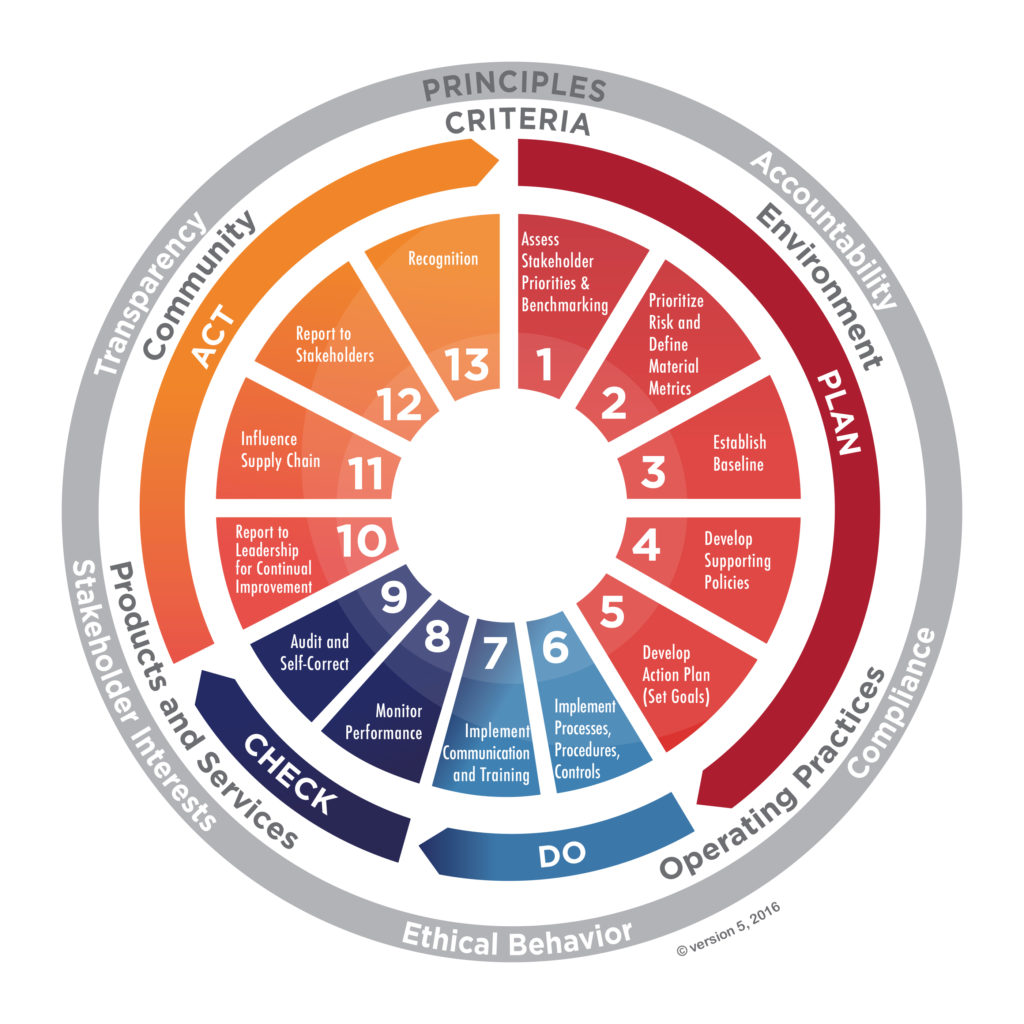
You’ll be guided through the following four main steps–Plan, Do, Check, Act (PDCA)–which break down into thirteen sub-steps that comprise an organization’s repeated cycle of improvement.
● Plan – Identify risk and establish objectives.
● Do – implement processes such as procedures, training and communication.
● Check – report, measure and monitor both voluntary and required obligations.
● Act – take necessary action for improvement based on your performance results.
Our PDCA steps accommodate organizations of different sizes, geographic locations and across industry sectors. They’re based on two benchmark international management system standards: ISO 14001 and OHSAS 18001 (the precursor to ISO 45001).
This Toolkit system also aligns with ISO 26000, the international standard on social responsibility, which defines these principles and criteria:
● Principles – Accountability, Compliance, Ethical Behavior, Stakeholder Interests, and Transparency
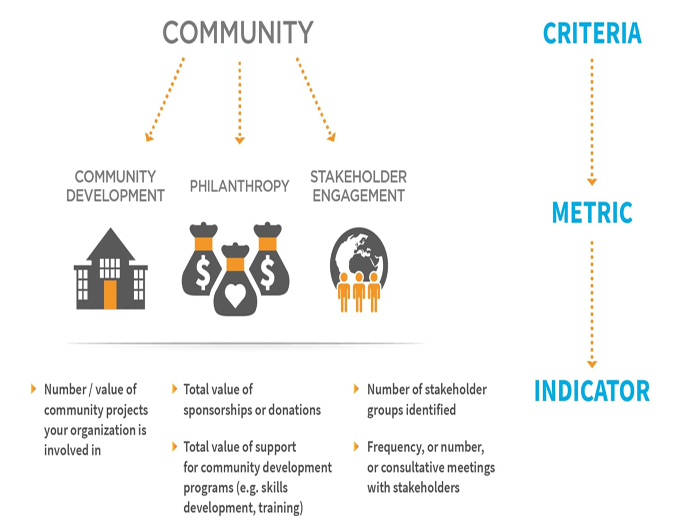
● Criteria – Environment, Operating Practices, Products and Services, and Community
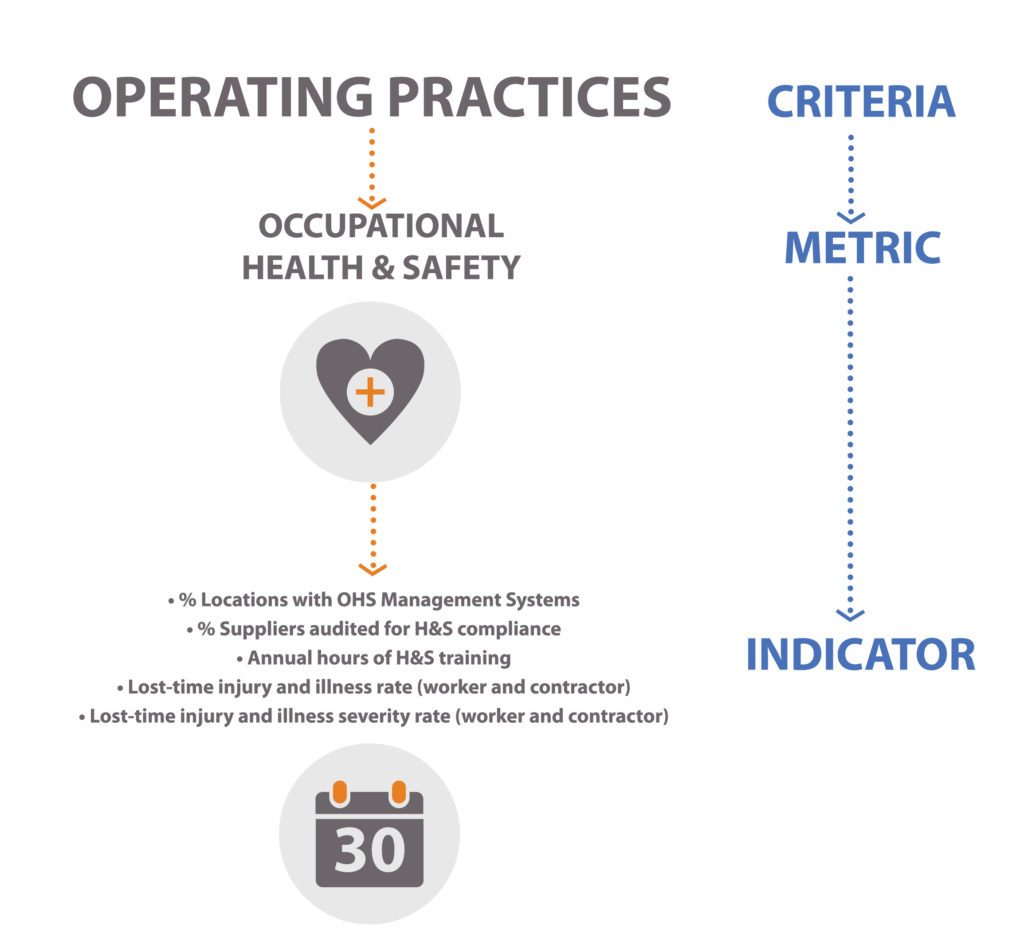
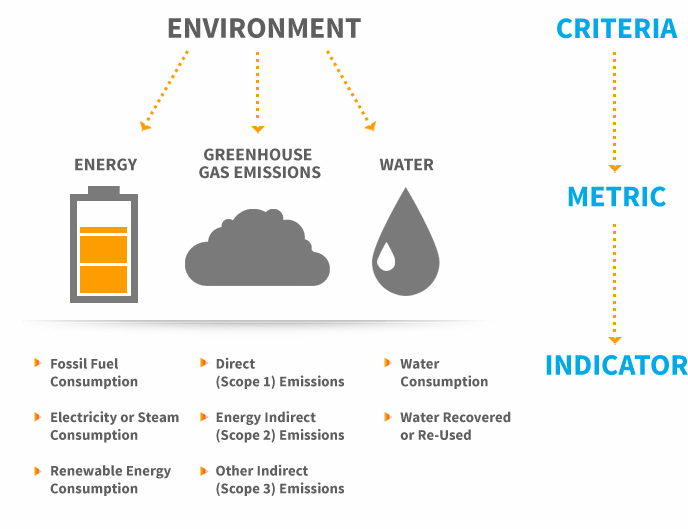
The principles are ongoing considerations for each sustainability initiative, while the criteria are used for defining its initiatives. Your organization will voluntarily determine the relevant metrics and indicators for each of the listed criteria. Here are possible examples for three different criteria:
Is your organization ready for the future?
More than a trendy business concept, business sustainability continues to gain momentum and could soon become mainstream business practice. This is why your business needs a strategy to meet the demands of the future.
Contact us to learn more about how our management system can improve your sustainability strategy.