
Our philosophy is to provide clients with unique and cost-effective
solutions. In doing so, we place great emphasis on knowledge sharing
to ensure we leave clients with the skills, experience and confidence to
carry the results of projects forward.
In October 2016, the Global Reporting Initiative (GRI) launched their new GRI Sustainability Reporting Standards (GRI Standards). The new GRI Standards, which take effect July 1, 2018, restructure the content, concepts, and disclosures from the G4 Guidelines and G4 Implementation Manual into a new format and presentation. While the impacts on the reporting process for organizations already reporting ‘in accordance’ with the G4 Guidelines will be relatively minor, it is important to understand the what changes have occurred when transitioning to the new guidelines.
What has Changed?
1. New Modular Structure
The GRI Standards are organized into 36, interrelated, modules. This new format allows GRI to easily keep the Standards up-to-date as new developments occur in sustainability, and incorporate new topics in future. Three ‘universal’ Standards apply to all organizations preparing an ‘in accordance’ report. There are also 33 topic-specific Standards that are categorized into three series: Economic Topics (400 series), Environmental Topics (500 series), and Social Topics (600 series). Each G4 Aspects has been broken out into a topic-specific Standard that can be updated separately. In addition, to ensure the GRI Standards are easy to use, all of the topic-specific Standards follow the same format.
2. Clarification
Several areas have been clarified in the GRI Standards to allow for more consistent, and higher quality reporting:
a. The GRI Standards clearly distinguish reporting requirements, recommendations, and guidance.
b. Content from the G4 Guidelines has been simplified, or revised, to make the Standards easier to read and more accessible. The following terms have changed in the GRI Standards:
| G4 Guidelines | GRI Standards |
|---|---|
| Aspect | Topic |
| General Standard Disclosures | General Disclosures |
| Specific Standard Disclosures | No Longer Used |
| Indicator | Disclosure |
| DMA | Management Approach |
| Organization | Reporting Organization |
c. Elements that were often misunderstood have been clarified, such as how to define the boundary for each topic, and how to report on topics that are not covered by the GRI Standards.
While most disclosures remain the same, some Aspects and Disclosures from the G4 Guidelines have been relocated or merged to make them easier to find, reduce redundancies, provide a more logical structure, and make the GRI Standards easier to navigate.
www.globalreporting.org/information/g4/sector -guidance/sectorguidanceG4/Pages/default.aspx
3. Sector Disclosures
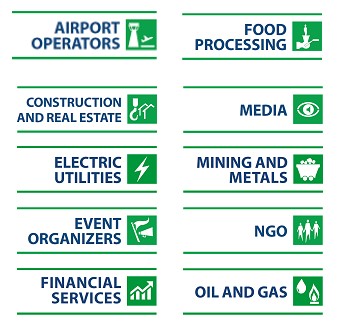
Organizations are no longer required to use the ten G4 Sector Disclosures to prepare a report ‘in accordance’ (core or comprehensive) with the GRI Standards. A new section in SRS 101: Foundation explains how the Sector Disclosures can be used to provide guidance to applicable organizations to help identify their material topics, and for reporting additional topic-specific disclosures as needed.
4. Content Index
Organizations are no longer required to use a specified table format to present the Content Index. While a Content Index is still required for all reports prepared ‘in accordance’ with the GRI Standards, organizations can format their Content Index any way they wish. As a minimum, the Content Index, must include the following information:
What’s Stayed the Same?
The Reporting Principles and importance of reporting on the management approach (DMA) have been carried through to the GRI Standards, with additional guidance. Also, the reasons for omissions remain the same but greater clarity on how and when they can be used has been included.
Materiality is Material!
The emphasis on materiality from the G4 Guidelines is included in the GRI Standards. Organizations must report on all material topics in their sustainability report, even if the topic is not covered by a topic-specific Standard. When creating their report, organizations will only select those topic-specific Standards that are applicable to them based on their material topics.
Topic-specific Standards have been designed to be used with SRS 301: Management approach so that organizations can report their management approach and topic-specific disclosures for each material topic.
What Else Should I Know?
As with the G4 Guidelines, organizations can choose to prepare a report ‘in accordance’ (core or comprehensive) with the GRI Standards. In addition to reporting a certain number of disclosures to be ‘in accordance’ with the core or comprehensive options, organizations must now comply with all of the reporting requirements that relate to the disclosures they have chosen, and comply with all requirements in ‘Using GRI Standards for sustainability reporting’ within SRS 101: Foundation.
Organizations who do not prepare a report ‘in accordance’ have the option to prepare a ‘SRS referenced’ report. This option is available for published material that uses individual GRI Standards, or sections of a Standard, to report sustainability information but that does not meet the criteria to be ‘in accordance’. Regardless of the option chosen, organizations must be transparent on how the standards have been applied. For example, ‘SRS referenced’ materials must include a claim, or statement of use, that indicates the GRI Standard(s) that were used, and/or the specific content that was used from a particular Standard.
The Standards are available for download from the GRI Website. While the G4 Guidelines remain valid until June 30, 2018, organizations are encouraged to adopt the new GRI Standards early. In order to assist organizations in their transition to the new Standards, GRI is hosting interactive launch events worldwide until May 2017.
Tavares Group Consulting offers customizable and scalable solutions to assist organizations pursue corporate sustainability and sustainable development. Our Corporate Social Responsibility (CSR) services include gap analysis/benchmark assessments, sustainability action planning and implementation, Corporate Responsibility and sustainability reporting, and assurance services. For more information on how we can assist your organization meet its CSR goals, contact us!